


How does Digital Smile Design work? It’s a question we hear often – usually from patients who have heard the name, seen it mentioned on our website, and want to understand what it actually means for them in practice.
Digital Smile Design, known as DSD, is a treatment planning methodology that uses digital technology to design, preview, and communicate your smile transformation before any clinical work begins. It is not a treatment in itself – it is the process by which complex aesthetic and restorative treatment is planned with precision and presented to you in a way that is genuinely meaningful.
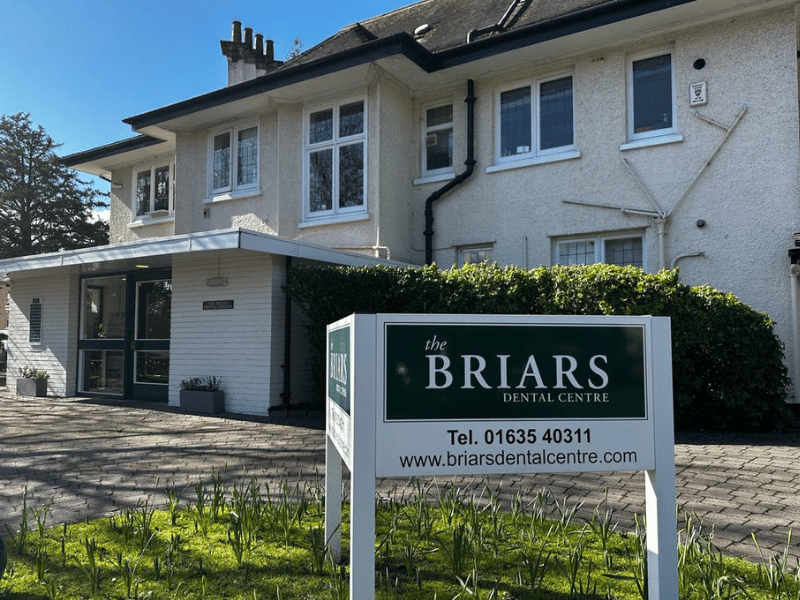
The Briars is one of only three dental practices in the United Kingdom with an official DSD partnership. That is not a marketing claim – it reflects a genuine commitment to the training, technology, and treatment philosophy that DSD requires. This article explains exactly what that means and what the process looks like when you come to us.
DSD changes the conversation between patient and clinician. Instead of describing what your smile could look like, we show you – digitally, before a single tooth is touched. You see the proposed result, provide feedback, and the treatment plan is refined until it reflects what you actually want. Only then does clinical work begin.
Traditional smile makeover consultations relied on clinicians describing proposed outcomes in words, or showing patients photographs of other people’s results. Neither approach gives a patient a meaningful sense of what their own smile transformation will look like – and neither gives the clinical team a reliable reference point for treatment planning.
Digital smile design was developed to solve both problems. By capturing precise digital records at the outset – photographs, video, facial measurements, and intra-oral scans – and using specialised design software to map proposed changes onto your actual face, it becomes possible to design a smile that is proportionate, natural, and specifically suited to your facial features. The result is visible before treatment starts. Adjustments are made digitally, not clinically. And the final design becomes the blueprint that guides every stage of treatment.
For patients considering significant smile transformations – whether through aligners, veneers, composite bonding, crowns, implants, or a combination — this changes the experience entirely. You are not guessing at an outcome. You are approving one.
|
STEP |
WHAT HAPPENS |
WHY IT MATTERS |
|
1 |
Digital records appointment |
We capture a comprehensive set of photographs and video — facial, profile, and intra-oral — along with iTero digital scans. This takes approximately one hour and forms the entire foundation of your DSD plan. The quality of this data directly determines the quality of what follows. |
|
2 |
Smile design |
Using DSD, our team maps proposed changes onto your digital records. Tooth proportions, shade, length, symmetry, and how your smile interacts with your lips and facial features are all considered. This is not a template – it is a design built around your specific anatomy. |
|
3 |
The preview appointment |
You return to see your proposed smile design on screen. This is the stage patients consistently describe as transformative – seeing their own face with their proposed smile, in real time, changes the conversation from abstract possibility to something concrete and personal. You can ask questions, request adjustments, and take time to reflect. |
|
4 |
Refinement and sign-off |
If changes are needed — and often they are — we refine the design digitally until it reflects exactly what you want. Nothing proceeds to clinical planning until you are satisfied with the proposed outcome. |
|
5 |
Wax-up and mock-up |
For many cases, the approved digital design is translated into a physical wax-up — a three-dimensional model of the proposed result. This can be used to create a temporary mock-up that is placed directly on your teeth in the clinic, giving you a physical preview of the result before any irreversible work begins. |
|
6 |
Treatment planning and delivery |
With the design approved and the mock-up confirmed, the clinical treatment plan is constructed. Every element — whether veneers, composite work, implants, or orthodontics — is guided by the DSD blueprint. The treatment team works to a clear, agreed reference rather than a verbal description. |
Digital Smile Design is not limited to a single treatment type. It is a planning methodology that can be applied across a wide range of aesthetic and restorative treatments, either individually or in combination.
Composite bonding and veneers
For patients considering composite bonding or porcelain veneers, DSD allows the proposed tooth shapes, lengths, and proportions to be designed and previewed before any preparation or bonding begins. This is particularly valuable for smile makeovers involving multiple teeth, where the relationship between each tooth — and between the smile and the face — needs to be considered as a whole.
Dental implants and full-arch restoration
For patients replacing missing teeth with implants, or undergoing full-arch treatment such as All-on-Four, DSD provides a facial framework for the restoration design. Rather than designing teeth in isolation from the jaw upwards, the process begins with the face and works inward — ensuring that the final restoration looks natural and proportionate within the patient’s specific facial context.
Combined orthodontic and restorative treatment
Many smile transformations involve a combination of tooth straightening and aesthetic work. DSD allows these elements to be planned together from the outset, so that aligner treatment positions teeth precisely where they need to be for the restorative work that follows. This prevents the frustration of completing orthodontic treatment only to discover that the finishing work doesn’t quite achieve the intended result.
The DSD process is particularly valuable for patients who have been told different things by different clinicians, or who have struggled to communicate exactly what they want. It creates a shared visual reference that removes ambiguity from the conversation entirely.
How Is The Briars’ DSD Partnership Different?
Having a Digital Smile Design partnership is not the same as using design software. The official DSD partnership that The Briars holds — one of only three in the UK — involves specific training, adherence to the DSD methodology, access to the DSD clinical network, and ongoing development through the DSD community of clinicians worldwide.
In practice, this means that when you undergo a DSD consultation at The Briars, you are receiving treatment planning guided by a methodology that has been developed, tested, and refined across thousands of cases internationally. The process is not a local adaptation — it is the genuine article.
For patients coming to us from other practices or seeking a second opinion on smile makeover treatment, the DSD process often provides clarity that previous consultations did not. Seeing a designed outcome, rather than being asked to imagine one, changes decisions.
Who Is DSD Right For?
Digital Smile Design is most valuable for patients considering significant aesthetic changes — particularly those involving multiple teeth, complex restorations, or combined orthodontic and cosmetic treatment.
It is also particularly well suited to patients who find it difficult to communicate what they want, who have had unsatisfying consultations elsewhere, or who want absolute clarity on the proposed outcome before committing to treatment.
If your needs are straightforward — a single tooth restoration, for example, or routine hygiene — DSD is unlikely to add meaningful value to your treatment planning. Our team will always be honest about where the process genuinely helps and where it does not.
Starting Your DSD Journey at The Briars
The process of digital smile design begins with a consultation — a conversation about what you’d like to change, what your priorities are, and whether DSD is the right approach for your situation. From there, we book the digital records appointment and begin the design process.
There is no obligation to proceed with treatment at any stage of the DSD process. You can come and see your proposed smile design, take time to think about it, and make your decision without pressure.
If you’d like to understand more about what digital smile design involves before booking, our existing article on what Digital Smile Design is provides a good introduction. Or if you’re ready to begin, our team will be happy to talk you through the process.
Digital Smile Design provides further information about the methodology and its clinical applications online – check out their website here!
Back to Blog