


Gum disease treatment sounds straightforward enough until you’re sitting in the chair wondering exactly what’s going to happen, who you’ll be seeing, and whether it’s going to be uncomfortable. Those are fair questions — and they deserve a proper answer rather than vague reassurance.
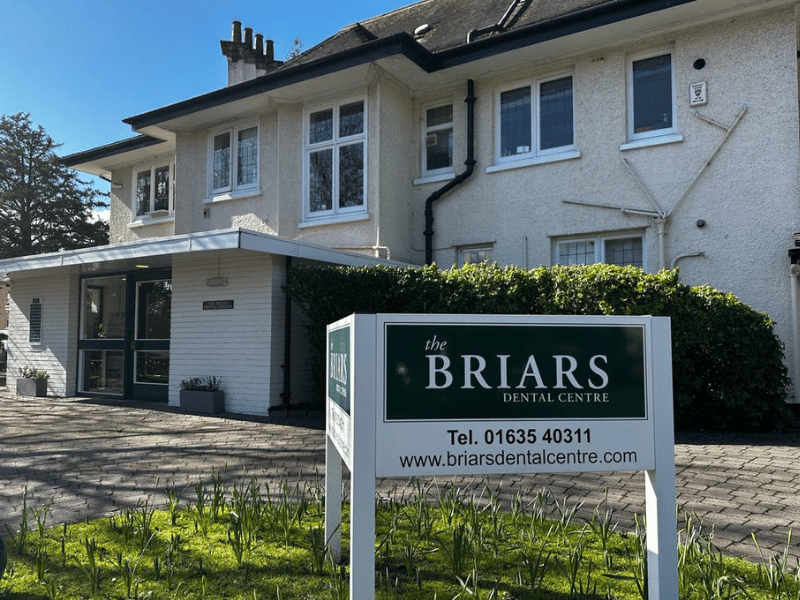
At The Briars, gum disease treatment is led by Sharmila Khopade, our specialist periodontist. This article walks through exactly what the process looks like in practice: from your initial assessment through to active treatment and the long-term maintenance that keeps the disease under control.
If you’ve been told you have gum disease and aren’t sure what comes next, this is where to start.
Gum disease — also called periodontal disease — is the leading cause of tooth loss in adults in the UK. It is also largely preventable and, when caught at the right stage, very manageable. The key is appropriate treatment followed by consistent maintenance. Neither element works without the other.
Why Gum Disease Treatment Is Different at a Specialist Practice
Not all gum disease treatment is the same. A general dental practice may offer scale and polish appointments that address surface-level plaque and tartar, but these are not the same as specialist periodontal treatment for established disease.
Sharmila is a specialist in periodontology — meaning her entire clinical focus is on the structures that support the teeth: the gums, the bone, and the ligament that holds each tooth in place. Patients are referred to her from other practices across the region, as well as being seen directly at The Briars. If your gum disease has been diagnosed as moderate or severe, or if previous treatment hasn’t resolved the problem, specialist input makes a material difference to your outcome.
You can refer yourself to Sharmila directly — you don’t need a GP or dentist referral to book a periodontal consultation at The Briars.
Everything starts with a thorough assessment. This is not a routine check-up — it is a detailed examination of the condition of your gums and the supporting bone around every tooth.
Six-point pocket charting
The central part of the assessment is six-point pocket charting. Using a fine probe, Sharmila measures the depth of the gap — called a pocket — between your gum and the tooth at six points around every single tooth. Healthy pockets measure 1 to 3 millimetres. Readings of 4mm or above suggest inflammation; deeper pockets indicate that the bone supporting the tooth has begun to deteriorate.
The numbers your clinician calls out during this process aren’t random — they are a precise map of the health of your supporting structures. We’ve written a separate article explaining what the pocket charting numbers mean in detail if you’d like to understand the scoring more fully.
X-rays and bone assessment
Alongside charting, we take X-rays to assess bone levels around the roots of the teeth. Gum disease causes bone loss that isn’t visible above the gumline — imaging lets us see what’s happening below the surface and assess how much support each tooth currently has.
Staging and grading
Based on the charting and imaging, Sharmila will stage and grade your disease using the internationally recognised BSP classification. Staging reflects the severity of the disease and how much damage has occurred. Grading reflects the rate at which it is progressing and the risk factors — including smoking, diabetes, and stress — that influence that rate. This classification directly informs the treatment plan.
Medical and lifestyle history
Your medical history matters more than many patients realise. Certain medications affect gum tissue. Smoking significantly impairs healing and treatment response. Stress and blood sugar control both influence periodontal disease progression. Sharmila takes a thorough history so that your treatment plan accounts for everything relevant to your individual situation.
Once the assessment is complete, active treatment begins. The goal at this stage is to remove the bacterial deposits — plaque and calculus — that are driving the disease from the root surfaces where they have accumulated below the gumline.
Root surface debridement
Root surface debridement (RSD) is the primary treatment for moderate to severe gum disease. Using specialist instruments — both hand instruments and ultrasonic scalers — Sharmila cleans the root surfaces of the teeth below the gumline, removing the hardened bacterial deposits that a toothbrush and routine hygiene appointments cannot reach.
This is carried out under local anaesthetic, so the areas being treated are fully numb. The number of appointments required depends on how much of the mouth is affected and the severity of the disease — most patients need two to four appointments, typically treating one or two quadrants of the mouth per visit.
RSD is not the same as a standard scale and polish. It is a clinical intervention targeted specifically at the areas where disease is active.
Guided Biofilm Therapy
At The Briars, our hygiene appointments use Guided Biofilm Therapy (GBT) — an evidence-based approach that uses disclosing technology to identify exactly where biofilm is present before treatment, then removes it using precise airflow and scaling methods. GBT is gentler on enamel and gum tissue than traditional scaling, and more thorough. It is used alongside RSD as part of the comprehensive treatment approach here.
If you’d like to understand more about GBT specifically, we’ve written a full explainer on what it involves and why we use it.
Oral hygiene instruction
No clinical treatment works in isolation. Sharmila and our hygiene team spend time with every patient on oral hygiene technique — not a generic leaflet, but personalised instruction on the brushes, tools, and methods that are right for your mouth. The bacterial deposits that cause gum disease reform within hours of cleaning. What you do at home between appointments determines whether treatment succeeds or stalls.
Active treatment is a partnership. Sharmila’s role is to create the conditions for healing. Your role is to maintain those conditions through excellent home care and consistent attendance at maintenance appointments. Both sides of that partnership are essential.
Approximately six to eight weeks after active treatment is complete, you return for a full reassessment. Sharmila repeats the pocket charting across the whole mouth to measure how the gums have responded.
In successful cases, pocket depths reduce as the inflammation resolves and the gum tissue tightens. Bleeding on probing — a key indicator of active disease — should reduce significantly or resolve entirely.
The reassessment determines what comes next. Many patients move into a long-term maintenance programme at this point. In cases where pockets remain deep despite treatment, or where there is significant bone loss that doesn’t resolve with non-surgical treatment alone, surgical options may be discussed — though the majority of patients do not require this.
Gum disease is a chronic condition. This is the most important thing to understand about it. Even when treatment has been successful and disease activity has reduced, the underlying susceptibility remains. Without ongoing professional maintenance and careful home care, the disease will return.
Long-term maintenance appointments — sometimes called supportive periodontal therapy — are typically scheduled every three to six months depending on your risk profile. They are not the same as routine hygiene appointments. They include reassessment of pocket depths, reinforcement of home care technique, and targeted cleaning of any areas that are showing signs of renewed activity.
Patients who commit to their maintenance schedule consistently achieve very different long-term outcomes to those who attend irregularly. The research on this is unambiguous.
What About Implants and Aligners After Gum Disease?
Gum disease and other dental treatments are closely connected. Patients with active, untreated gum disease are not suitable for dental implants — placing an implant into an infected environment risks the implant failing, often at significant cost. Similarly, starting clear aligner treatment without addressing active periodontal disease is unlikely to give a stable long-term result.
The good news is that successfully treated and well-maintained gum disease does not necessarily rule out implants or orthodontic treatment. We’ve written a detailed article specifically on dental implants after gum disease for patients who have had this question.
If you have been told you have gum disease, have noticed bleeding gums, or have been referred to a specialist, we would encourage you to act sooner rather than later. Gum disease is progressive — it does not improve on its own, and delay almost always means more treatment rather than less.
You can book a consultation with Sharmila directly through The Briars. Our team will take a full history, explain what the assessment involves, and make sure you feel fully informed before anything begins. There are no surprises.
The British Society of Periodontology provides independent patient information on gum disease, its causes, and what treatment involves – check out their website here.
Back to Blog